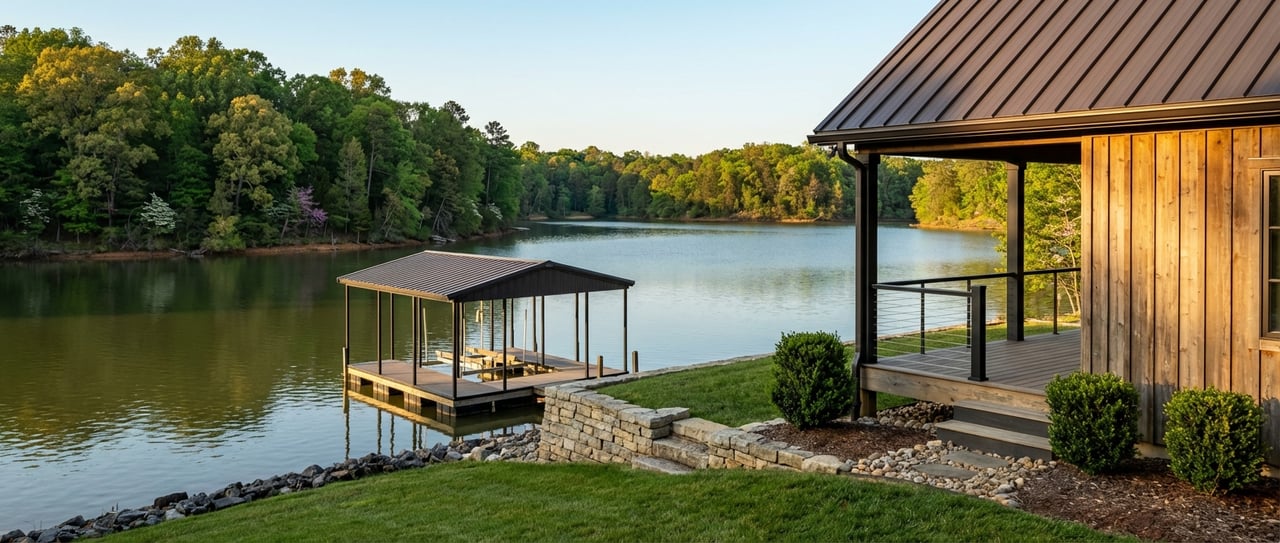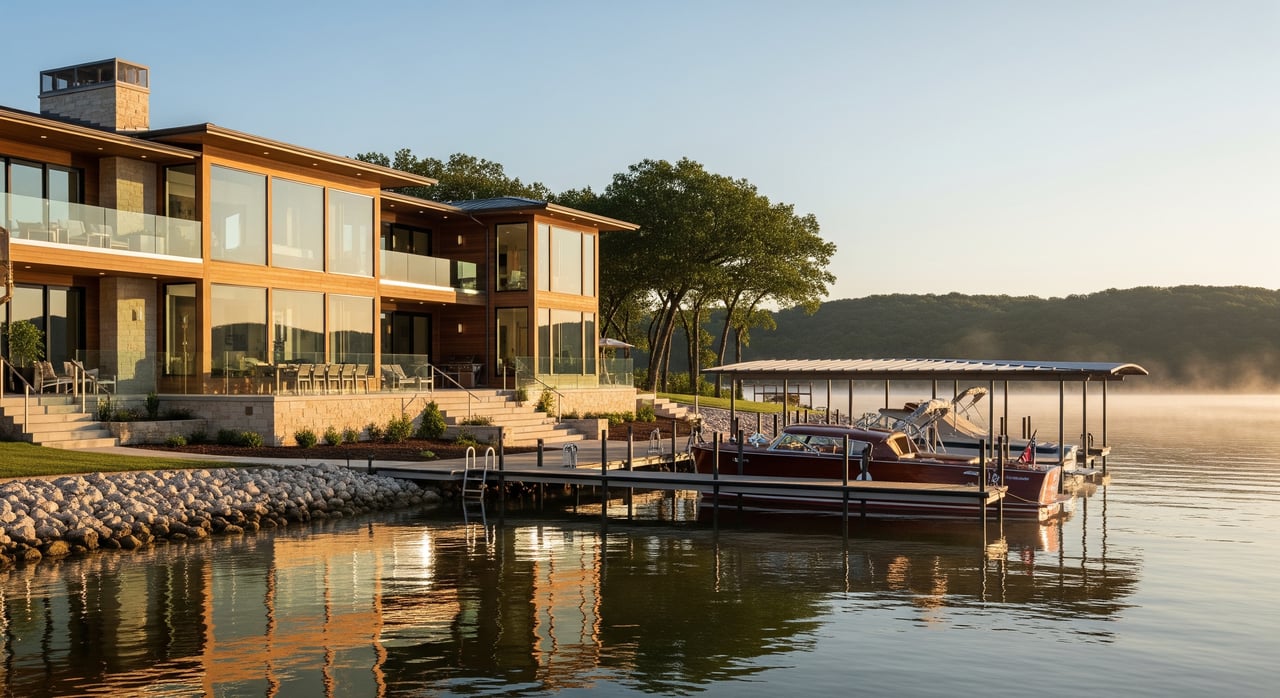
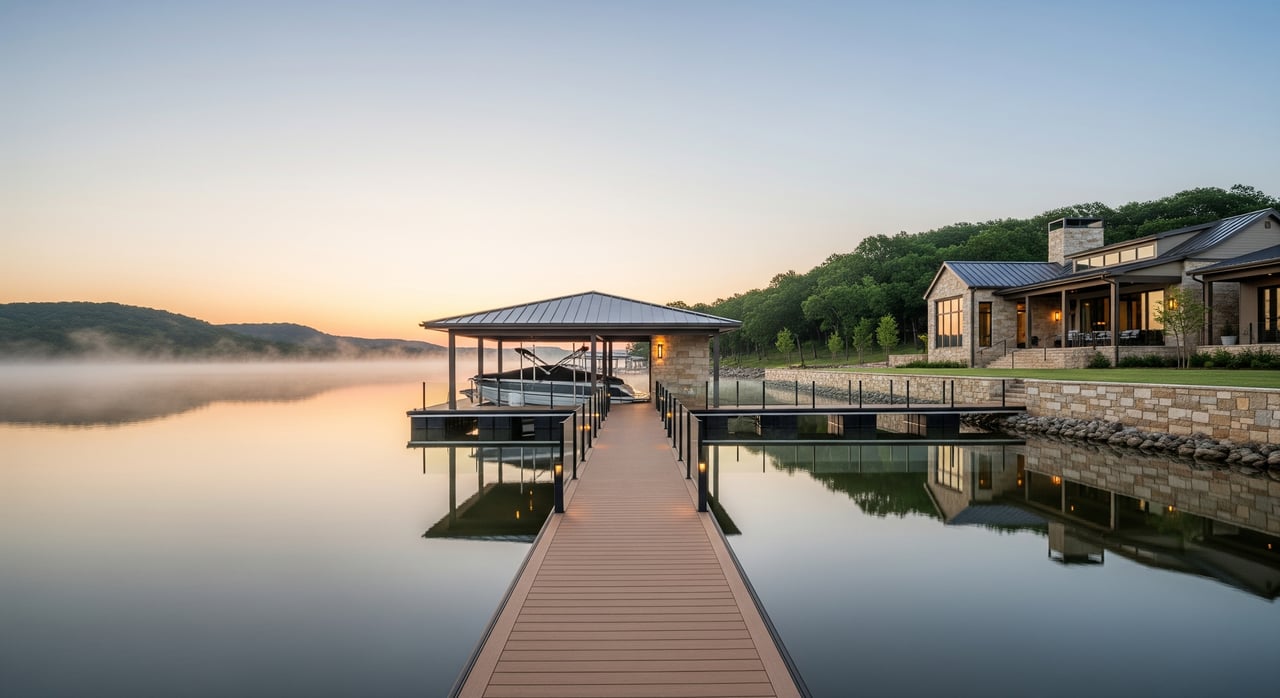
Thinking about a lakefront home in Sunrise Beach or Porto Cima and wondering how financing works when prices climb? You are not alone. Jumbo loans can feel complex, especially with waterfront details like docks, flood insurance, and unique appraisals in the mix. In this guide, you will learn what counts as a jumbo loan, 2024 limits, what lenders look for, how long the process takes, and which financing paths are common around Lake of the Ozarks. Let’s dive in.
What is a jumbo loan
A jumbo loan is a mortgage that is larger than the conforming loan limit set by the Federal Housing Finance Agency. These loans are not eligible for purchase by Fannie Mae or Freddie Mac, so lenders use their own standards that are typically stricter. That often means higher credit expectations, larger down payments, and more cash reserves.
For 2024, the baseline conforming limit for a one‑unit property is $766,550. Camden County, Missouri is not designated as a high‑cost area, so the baseline applies in Sunrise Beach and Porto Cima. If your purchase price or loan amount exceeds that threshold, you will likely use a jumbo loan or another financing route.
How this applies in Sunrise Beach
Many luxury lakefront homes and custom builds around Porto Cima exceed the baseline limit. If your price point is above the conforming threshold, you will compare jumbo programs or consider alternatives like portfolio lending or private bank financing.
You will find both local and national options in the Lake of the Ozarks market. Local community banks and regional credit unions often keep loans on their own books, which can be helpful for unique waterfront features or limited comparable sales. National jumbo lenders and private banks provide broader product menus and may offer competitive pricing for well‑qualified buyers.
Typical jumbo requirements for lakefront homes
Jumbo underwriting varies by lender, but most programs share common themes. Expect the exact requirements to depend on your profile, the property, and the lender’s guidelines.
Credit and DTI
Many lenders look for higher credit scores on jumbo loans. Minimums often range from the mid‑600s to mid‑700s, and the best pricing or highest loan‑to‑value ratios usually require scores in the 720 to 760 range or higher. Debt‑to‑income ratios are often capped near 43 percent, and some lenders prefer lower caps when reserves or property factors are complex.
Down payment and LTV
Down payments commonly start at 10 to 20 percent for well‑qualified primary residences. For second homes, investment use, or unique lakefront properties with limited comps, many lenders want 20 to 25 percent or more. For some one‑of‑a‑kind waterfront homes, you may see equity requirements of 20 to 30 percent.
Reserves and liquidity
Jumbo loans typically require larger cash reserves after closing. A common pattern is at least 6 months of total housing payments for a primary residence, and 12 months or more for second homes, investments, or complex income profiles. Lenders review liquid assets, retirement accounts, and documentation that shows your access to funds.
Income documentation and self‑employed borrowers
Full documentation is the norm. Plan to provide recent pay stubs, W‑2s, and two years of tax returns. If you are self‑employed, expect to supply business tax returns, profit and loss statements, and possibly bank‑statement verification. Some non‑QM or bank‑statement jumbo programs are available for borrowers with nontraditional income documentation, though pricing and terms can differ.
Property and appraisal specifics at the lake
Waterfront appraisals often require more time and expertise. Appraisers must locate comparable sales, which can be limited around unique shoreline locations. They will consider dock or boat slip rights, shoreline condition, slope, view orientation, and any flood mitigation. Some lenders require an appraiser with direct experience in waterfront or resort properties. If an appraisal value comes in lower than the purchase price, buyers typically respond by increasing the down payment, negotiating with the seller, or adjusting financing.
Flood insurance and insurability
Parts of the shoreline may fall within FEMA‑designated flood zones. If required, your lender will need proof of adequate flood insurance before closing. Flood insurance availability and costs can affect overall carrying costs, so it helps to confirm early in the process.
HOA, docks, and title
If the property is in an HOA, lenders will review dues and the association’s documentation as part of your qualifying picture. Title reviews may cover easements, riparian rights, shared shoreline access, or dock permissions. Clear title and accurately documented rights are important for both appraisal and underwriting.
Financing paths for high‑value waterfront
Lake buyers in Sunrise Beach and Porto Cima commonly compare several routes when prices exceed the conforming limit:
- Jumbo mortgage. The standard choice for qualified buyers who want a fixed or adjustable rate with 10 to 30 percent down, depending on qualifications and lender rules.
- Portfolio lending. Local banks and credit unions that keep loans on their books may be more flexible with unique property features, docks, or thin comparable sales.
- Private bank or wealth management lending. For affluent buyers who have relationship assets, private banks may offer flexible structures or reserve considerations.
- Non‑QM or bank‑statement programs. Useful for self‑employed buyers with complex income, but pricing and documentation requirements vary.
- Lot and construction financing. If you are buying a waterfront lot or building a custom home, you may use a lot loan or a construction‑to‑perm loan that converts to a permanent jumbo mortgage at completion.
- Government‑backed programs. FHA limits make it uncommon for high‑value lakefront purchases. VA may be an option for eligible buyers with sufficient entitlement, but large luxury purchases are usually financed outside FHA and USDA frameworks.
Cash vs financing on the lake
Paying cash offers a stronger negotiating position and a faster, simpler closing. You also avoid interest expense and reduce the risk of appraisal‑related delays. Cash can be attractive if you value speed, privacy, and certainty.
Financing lets you preserve liquidity and keep investments in place. You may benefit from potential tax advantages depending on your situation. With a mortgage, you can maintain diversification while still buying the property you want.
For lakefront homes, factor in appraisal risk and insurance. Unique waterfront features can create appraisal gaps, so financing buyers should budget for the possibility of a higher down payment. If flood insurance is required, build that cost into your monthly picture.
Timeline and what slows closings
Jumbo financing takes more time than a typical conforming loan. Here is what to expect in the Sunrise Beach area.
- Preapproval and initial underwriting. Plan for 3 to 10 business days if your documentation is complete. Complex assets or self‑employment can extend this stage.
- Appraisal and survey. Expect 1 to 3 weeks. For unique waterfront homes, plan for 2 to 4 weeks or more to secure an experienced appraiser and quality comparable sales.
- Underwriting to clear‑to‑close. Commonly 2 to 4 weeks. Complex documentation, appraisal negotiations, title matters, and HOA reviews can push timelines to 45 to 60 days or longer.
- Overall contract to close. Many jumbo purchases close in 30 to 60 days, depending on lender responsiveness, appraisal timing, and any construction or lot‑loan elements.
Frequent delays include finding comparable sales, finalizing flood insurance, receiving HOA documents, and clearing title items like dock or shoreline rights. You can help keep momentum by ordering the appraisal early, verifying flood zone status, gathering full documentation up front, and working with a local team that handles Lake of the Ozarks details every week.
Your lender prep checklist
Being prepared helps you lock in the right loan and close on schedule.
Questions your lender will ask
- Intended occupancy: primary residence, second home, or investment property.
- Purchase price and planned down payment.
- Employment status and income sources.
- Assets across bank, brokerage, and retirement accounts, including gifts.
- Existing debts and all real estate you own.
- HOA or association details, including dues and reserve status.
- Flood zone status and whether the property has a dock or shoreline improvements.
- How you will hold title, such as personal name, trust, or LLC.
- Any immediate renovation plans.
- Whether you plan to rent the property seasonally.
Documents to gather early
- Two years of personal tax returns, plus business returns if self‑employed.
- Recent pay stubs and the last two years of W‑2s.
- Bank and investment statements, typically the last two months.
- Proof of funds for down payment and closing, with gift letters if applicable.
- K‑1s and profit and loss statements for business owners.
- Letters of explanation for large deposits.
- Trust or LLC formation documents if using an entity.
- HOA documents and dues information if applicable.
- Insurance details, including flood insurance if required.
Next steps
If you are shopping lakefront in Sunrise Beach or Porto Cima, start by clarifying your price range, down payment, and occupancy. Compare a local portfolio lender with one or two national jumbo programs, and consider whether a private bank relationship could help. Get your documentation in order and ask for an appraiser with waterfront experience once you are under contract.
You deserve a smooth path to the lake lifestyle you want. If you would like local guidance on neighborhoods, docks, and the steps from offer to close, connect with the team that lives and works here every day. Reach out to Albers Real Estate Advisors to align the right property with the right financing and timeline.
FAQs
What counts as a jumbo loan in Camden County, MO?
- For 2024, any one‑unit loan amount above the baseline conforming limit of $766,550 is considered jumbo in Camden County, since it is not a designated high‑cost area.
Do Sunrise Beach lakefront homes require flood insurance?
- If a property is in a FEMA‑designated flood zone, your lender will require flood insurance, so verify flood status early and get quotes to budget accurately.
How much down payment is typical for a second home at the lake?
- Many lenders look for 20 to 25 percent down on jumbo loans for second homes, with higher equity possible for unique waterfront properties or thin comparable sales.
How long does a jumbo closing take for a waterfront home?
- Many jumbo transactions close in 30 to 60 days, with timing driven by appraisal availability, HOA or title reviews, flood insurance, and your documentation.
What if the appraisal comes in low on a lakefront jumbo purchase?
- Common solutions include increasing your down payment, negotiating price changes or concessions, or exploring interim financing while you resolve valuation gaps.
Are portfolio lenders better for Porto Cima properties with docks?
- Portfolio lenders can be more flexible on unique features like private docks or limited comps, while national jumbo programs may offer sharper pricing for well‑qualified borrowers.